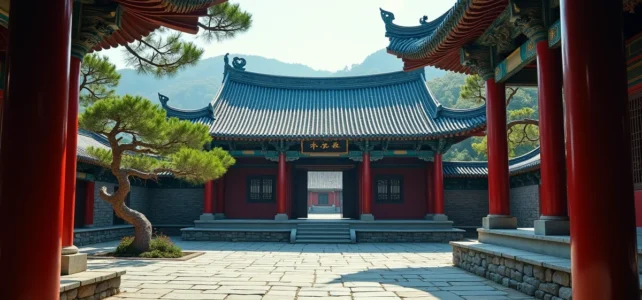
In China, blue roofs are not just an aesthetic choice. They carry a deep symbolic heritage, rooted in Chinese cosmology and imperial architectural codes. From ancestral temples to contemporary buildings, this color transcends time without losing its meaning.
Blue Glazed Tiles: A Unique Manufacturing Technique
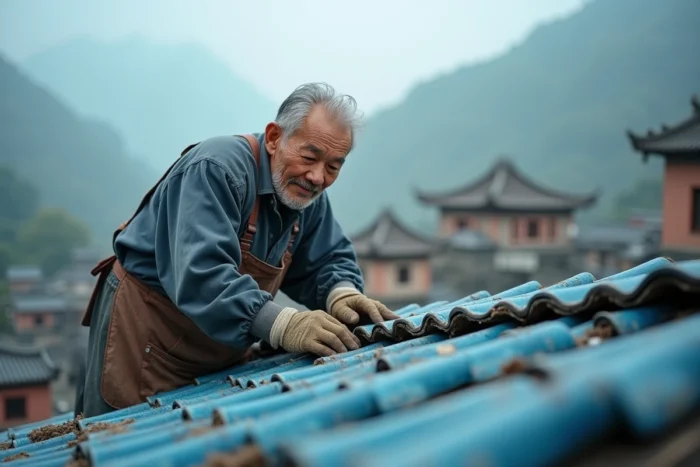
Have you ever noticed that Chinese roofs have a particular shine, almost lacquered? This effect comes from a precise process: the glazing of ceramic tiles at high temperatures. The glaze, a mineral mixture applied before firing, fuses with the clay and produces a waterproof, shiny, and colorful surface.
Related reading : Top Trees to Naturally Repel Mosquitoes in Your Garden
This process gives glazed tiles exceptional durability against the elements. The vitrified layer resists moisture, moss, and thermal variations, which explains why some century-old roofs retain their original hue. Chinese artisans have mastered this technique for centuries, and the exact composition of the glazes (metal oxides, feldspar, silica) determines the shade obtained.
For blue, cobalt oxide is the key ingredient. Depending on its concentration and the temperature of the kiln, tones range from deep blue to light turquoise. This craftsmanship aligns with that of the so-called “blue and white” Chinese porcelain, where cobalt plays the same role. The connection between porcelain and architecture is not trivial: it reflects a coherent material culture, where the same pigment serves various uses.
Further reading : In the Shadow of the Medal: Zoé Grospiron's Mother, an Unsung Pillar
To learn everything about blue roofs and their place in traditional architecture, one must first understand this link between ceramic craftsmanship and construction.
The Symbolism of Blue in Chinese Cosmology
Why blue, and not another color? In the Chinese system of five elements (wu xing), each color corresponds to an element, a direction, and a function. Yellow is reserved for the emperor and symbolizes the earth, the center of the world. Red embodies fire, luck, and vitality. Green is associated with wood and renewal.
Blue represents the sky, the wood element in some interpretations, and the east. It also evokes spring and growth. In the imperial architectural hierarchy, religious buildings dedicated to sky worship featured blue roofs. The Temple of Heaven in Beijing is the most well-known example: its three levels of deep blue tiles symbolize the celestial vault.
This attribution was not decorative. It adhered to a strict code. Only certain buildings were allowed to have tiles of a given color. A temple dedicated to the sky displayed blue, an imperial palace yellow, a princely building green. Violating these rules amounted to contesting the cosmic and political order.
Color Code of Roofs and Architectural Hierarchy in Imperial China
This color system was not a vague convention. It functioned as a strict regulation, comparable to a modern urban planning code. Each social rank, each building function dictated the color, shape, and size of the permitted roof.
- Yellow was exclusively reserved for imperial residences and major temples directly associated with the emperor, such as those in the Forbidden City in Beijing.
- Blue covered buildings related to sky worship and certain high-ranking religious functions, reflecting a direct connection to the celestial sphere.
- Green was assigned to princely residences, secondary temples, and some high-ranking administrative buildings.
- Black and gray were reserved for ordinary constructions, residences of officials, or buildings without ceremonial function.
The color of the roof indicated the status of the building even before entering. This visual system allowed any visitor to understand the function and rank of a building from a distance. The roof played a role in social communication as much as in protection against the elements.
Contemporary Blue Roofs: Between Cultural Heritage and Solar Industry
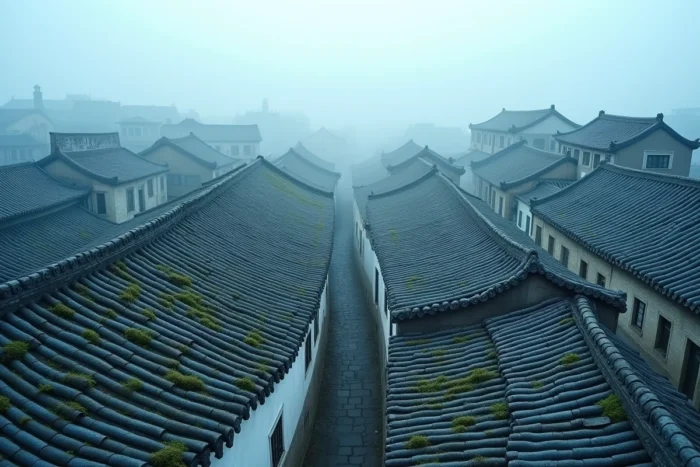
Today, blue roofs in China are no longer limited to temples. They can be found on residential buildings, industrial structures, and public facilities. Several factors explain this persistence.
The first is cultural. Blue remains associated with celestial protection and prosperity in the Chinese imagination. Choosing a blue roof for a new building, even without religious ties, fits into a symbolic continuity. It is a gesture that connects the contemporary to a millennia-old tradition.
The second factor is industrial. The explosion of photovoltaic production capacity in China has created a massive overcapacity in recent years. This pressure pushes manufacturers to develop higher value-added products, including BIPV solutions (building-integrated photovoltaic panels). These modules can mimic the appearance of traditional tiles, including in blue tones.
The rising price of silver, a key component of solar cells, reinforces this trend. Manufacturers seek to justify higher prices with aesthetically pleasing and architecturally integrated products. The blue roof becomes a convergence point between cultural tradition and industrial strategy.
This intersection is unique to China. In few other countries does a roof color carry as much historical significance while responding to contemporary market logic. Blue is not simply preserved out of habit: it is reinvested, reinterpreted, and adapted to current construction and energy constraints.
Why This Chinese Architectural Tradition Endures
The persistence of blue roofs in China is due to a rare overlay of factors. An ancient symbolic system, still alive in popular culture. A ceramic craftsmanship passed down without interruption. And an industrial context that, by coincidence or design, extends the use of this color in a new form.
Chinese blue roofs are not a frozen relic but a living tradition, capable of adapting to the materials and challenges of each era. That the next generation of blue roofs produces electricity in addition to symbolizing the sky would surely have pleased the architects of the Temple of Heaven.