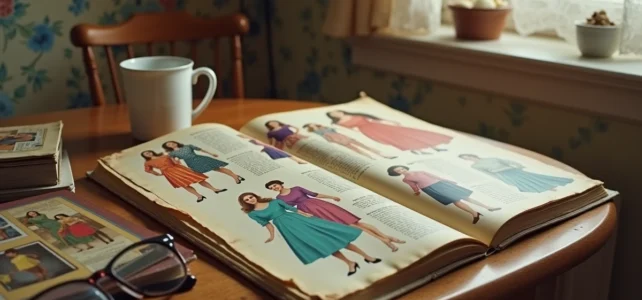
We still regularly come across the question in forums or with family: does the Quelle catalog still exist, the one that used to arrive in the mailbox and that we would leaf through for hours before placing an order? The short answer: the paper catalog disappeared in 2009. The long answer deserves some attention because the brand has not completely ceased to exist and the landscape of mail-order sales has radically changed since then.
Quelle online in Germany: an unknown survival after liquidation
When trying to find out if the Quelle catalog still exists, one discovers a detail that most articles overlook. The Quelle brand is still operated in Germany in the form of an online store, with an active customer service and recent consumer reviews on Trustpilot.
You may also like : 2026 Comparison: Dubraz and Alternatives, How to Choose the Best Platform?
It is no longer the same group, nor the same scale. When Quelle Deutschland was liquidated by Arcandor in October 2009, discussions were held about taking over certain activities outside of Germany. The specialized mail-order activities not included in the bankruptcy filing continued to operate independently.
Specifically, if you visit quelle.de today, you will find a general e-commerce site selling furniture, appliances, and fashion. Nothing like the hundreds of paper pages of the past, but the commercial name Quelle has not disappeared from the German market.
Recommended read : Disruptive Innovation and Incremental Innovation: Understanding the Differences and Concrete Examples
Quelle catalog: from Gustav Schickedanz to the 2009 bankruptcy
Gustav Schickedanz founded Quelle in 1937 in Germany with a simple idea: a catalog of items that could be ordered from home, delivered everywhere thanks to Deutsche Post. The concept took off in the post-war period when access to stores remained limited for a large part of the European population.
In France, the Quelle catalog became a staple in households alongside La Redoute and 3 Suisses. It offered everything: clothing, appliances, decor, toys. At the height of its activity, the company employed several thousand people just in Germany.
What caused the downfall
Mail-order sales relied on a slow cycle: printing, distribution, ordering by mail or phone, delivery over several weeks. When online commerce began to offer shorter delivery times and a catalog updated in real-time, Quelle’s business model became structurally unprofitable.
The Arcandor group, the parent company of Quelle, accumulated debts without managing to transition to digital quickly enough. The judicial liquidation declared in October 2009 ended the paper catalog and most of the group’s operations. Opinions vary on the exact reasons for the digital lag, but the result is the same: Quelle did not survive the transition to e-commerce.
Mail-order in 2026: what has concretely replaced the paper catalog
For those who enjoyed flipping through a catalog before ordering, the experience has migrated to screens, in sometimes very different forms. We can distinguish three main categories of alternatives.
- General marketplaces like Amazon or Zalando offer an almost unlimited catalog with filter searches, customer reviews, and fast delivery. This is the most direct replacement for the “everything under one roof” that Quelle provided.
- Former direct competitors of Quelle in France, notably La Redoute, have successfully made their digital transition. La Redoute has shifted from a thick paper catalog to an online platform specializing in fashion and home, while retaining a portion of its historical customer base.
- Interactive digital catalogs, accessible through apps like Bonial, gather brochures and catalogs from many brands. This is the modern version of browsing, without the paper.
The paper catalog has not completely disappeared
Some brands continue to send physical catalogs, especially in the luxury or high-end decor segment. IKEA maintained its paper catalog for a long time before stopping it in 2021. In the food sector, paper brochures are also declining, replaced by digital versions accessible online.
Nostalgia for the Quelle catalog: where to find this universe today
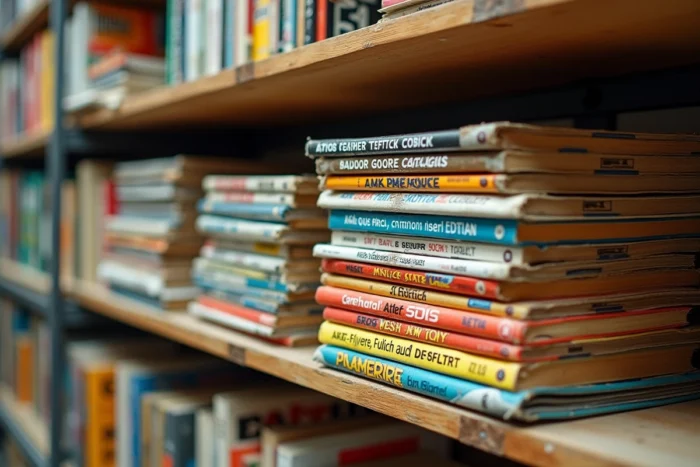
On social media, pages dedicated to memories regularly share photos of old Quelle catalogs. On Facebook, posts showing pages from the spring-summer 1981 catalog garner hundreds of reactions. These communities keep alive the memory of an object that went beyond just a simple list of products.
For collectors, old issues can be found on peer-to-peer selling sites. Prices vary depending on condition and year, but some copies from the 1970s and 1980s generate real interest.
The model that Quelle helped invent, ordering a product from home that you cannot touch, remains the founding principle of today’s e-commerce. Amazon, Zalando, and La Redoute are the direct heirs of what Quelle did by mail. The difference lies in the medium and speed, not the concept. The paper catalog of Quelle has disappeared, but the idea it represented has never been more alive.