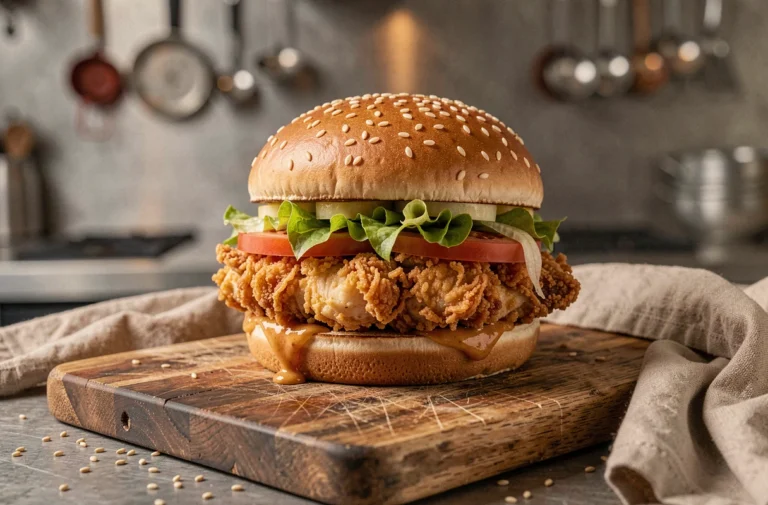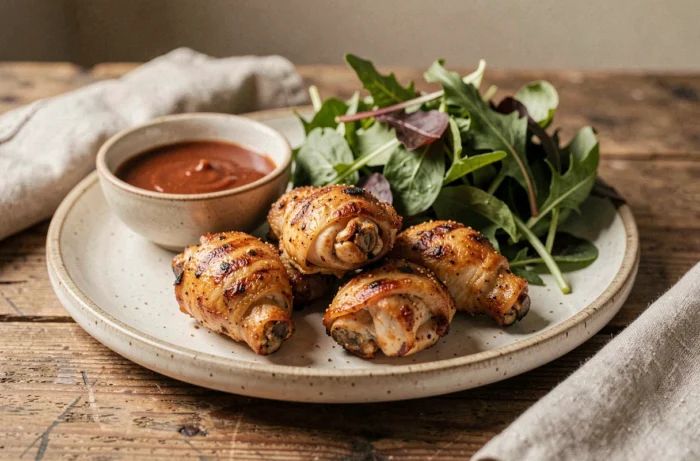
Pepe Chicken offers a menu built around fried chicken in various forms: tenders, wings, burgers, wraps, and thighs. Each product format presents a distinct caloric profile, linked to its cooking method, coating, and portion size served. Understanding these differences allows for composing a meal tailored to one’s needs, whether the goal is a high protein intake or managing fat content.
Lipid profile of fried chicken: why calories vary so much at Pepe Chicken
Fried chicken derives most of its caloric density not from the meat itself, but from the coating and the frying oil. The batter absorbs a variable amount of oil depending on the thickness of the crust and the exposed surface area.
The wings illustrate this mechanism well. Their surface-to-volume ratio is high: a lot of skin and batter for a limited amount of meat. As a result, wings have the highest lipid density on the menu. For a portion of six pieces, it reaches 480 kcal with 34 g of fat, meaning more than half of the energy comes from fats.
Tenders, on the other hand, offer thicker pieces of fillet with proportionally less fried surface area. Three tenders represent 360 kcal for 18 g of fat, a significantly more favorable ratio. For those looking for detailed data on calories and nutritional values of Pepe Chicken, the comparison between these two formats is the first decision to make.

Calories of Pepe Chicken tenders, wings, and burgers: comparison table
A table is worth more than a long description when comparing products within the same brand. Here are the available data for the main items on the menu.
| Product | Calories | Protein | Carbohydrates | Fat | Portion |
|---|---|---|---|---|---|
| Pepe Tenders (3 pieces) | 360 kcal | 30 g | 20 g | 18 g | 160 g |
| Pepe Tenders (5 pieces) | 600 kcal | 50 g | 33 g | 30 g | 265 g |
| Pepe Wings (6 pieces) | 480 kcal | 34 g | 14 g | 34 g | 190 g |
| Pepe Wings (10 pieces) | 800 kcal | 57 g | 24 g | 56 g | 320 g |
| Big Box Pepe | 1050 kcal | 72 g | 48 g | 62 g | 450 g |
| Chicken Thigh | 290 kcal | 24 g | 12 g | 18 g | 125 g |
| Pepe Classic Burger | 540 kcal | 30 g | 44 g | 28 g | 230 g |
The Big Box Pepe exceeds 1000 kcal because it combines wings and tenders in one box. By itself, it covers about half of the average daily energy needs of an adult.
Protein per calorie: the often overlooked criterion
The gross number of calories tells only part of the story. The protein/calorie ratio helps identify the most interesting choices from a nutritional standpoint.
Tenders offer the best protein yield on the menu. For 360 kcal, you get 30 g of protein, which is about 8.3 g of protein per 100 kcal. Wings, despite a decent protein contribution in absolute terms, drop to 7.1 g of protein per 100 kcal due to their high fat content. The chicken thigh falls between the two.
Allergens and halal meat at Pepe Chicken: what the menu doesn’t always show
The brand communicates about the use of certified halal meat, which involves suppliers subject to specific cutting and slaughtering standards. This certification does not change the nutritional profile of the finished product, but it influences the traceability of the supply chain.
A less frequently addressed point concerns allergens present in the preparation workshops. Pepe Chicken recipes use ingredients like peanuts, gluten, and sesame. Cross-contamination remains possible despite separation procedures. Reporting allergies at the time of ordering remains the basic precaution.
- Gluten is present in the batter of all fried products (tenders, wings, burgers).
- The sauces may contain traces of peanuts or sesame depending on the recipes.
- Sides like fries share the same frying oil as the breaded chicken.
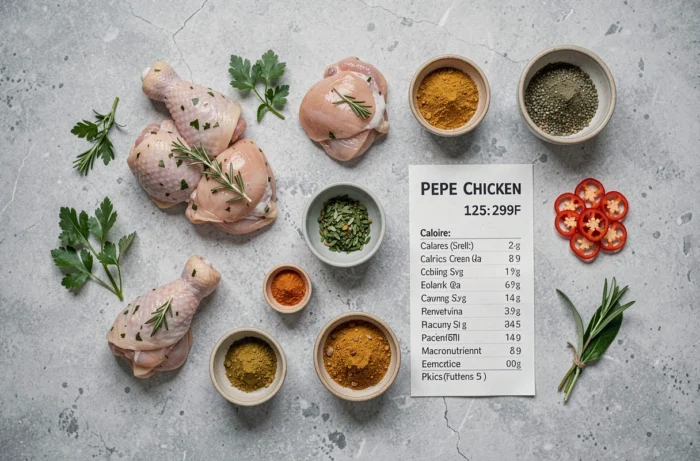
Compose a Pepe Chicken menu with a specific caloric goal
Choosing a meal at Pepe Chicken while considering calories means adding up each component: main dish, side, sauce, and drink. Fries and sauces add significant caloric intake that can turn a reasonable dish into a very rich meal.
Moderate intake meal
Three tenders (360 kcal) accompanied by a salad instead of fries keep the entire meal under 500 kcal, including a non-sweetened drink. Avoiding creamy sauces reduces fat intake by several grams per portion.
High intake meal
The Big Box Pepe with fries and a sweetened drink can easily exceed 1400 kcal. This type of menu covers a very large portion of daily needs in a single meal. Delivery through fast food platforms encourages this generous format, consumed in the evening when energy expenditure is lowest.
The brand created by YouTuber FastGoodCuisine has established itself in many cities in France and Belgium. The menu remains relatively stable from one outlet to another, making it easier for regulars to track their nutrition. The three-piece tenders remain the most balanced choice in terms of protein/fat/calories ratio, a useful reference for those who frequent this brand regularly without wanting to give up the pleasure of crispy chicken.