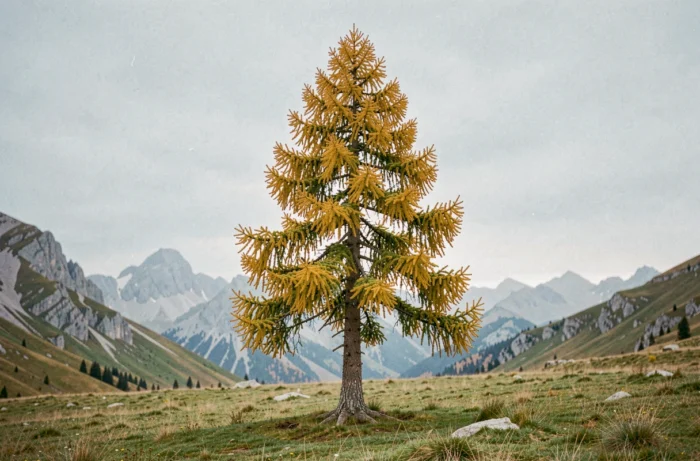
The letter L encompasses a range of trees with very different uses, from the Mediterranean bay laurel to the ornamental Indian lilac, not to mention the North American sweetgum. Some of these specimens have stood the test of time, while others pose real botanical confusion problems with toxic species. Compiling their list allows for the identification of species suitable for a garden, a container, or a hedge project, but also helps understand why some deserve special attention.
Bay laurel and toxic confusions: a tree in L to identify without error
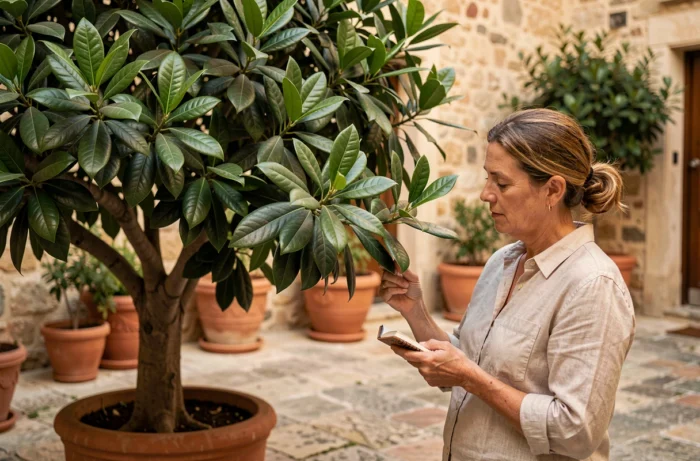
The bay laurel (Laurus nobilis) is probably the most common L tree in French culture. Its leaves have been used to flavor broths and stews since antiquity. However, it should never be confused with the oleander or cherry laurel, two plants whose ingestion can cause serious poisoning.
Recent advice from the National Agency for Food, Environmental and Occupational Health Safety emphasizes the importance of correctly identifying Laurus nobilis before any culinary or cosmetic use. The oleander (Nerium oleander) has thinner, tougher leaves, while the cherry laurel (Prunus laurocerasus) features shiny, broader leaves without the characteristic aroma of bay laurel.
To explore trees that start with L comprehensively, this botanical distinction is the first reflex to adopt. The bay laurel can be recognized by its dark green, matte leaves, slightly wavy at the edges, which release an aromatic scent when crushed.
Useful properties for the garden and the home
In 2026, several gardening sources popularized a low-cost use of bay laurel: an infusion of four to five leaves in one liter of water would serve as a gentle fertilizer for weakened houseplants and young seedlings. This same preparation is sprayed as a pest control treatment against aphids and whiteflies, provided it is tested on a small area beforehand.
Experience reports published the same year also describe the use of fresh bay laurel leaves as a repellent against rodents. Placed on a windowsill or in a garage, they would deter rats and mice due to their content of aromatic compounds. The available data do not allow for a conclusion on the actual effectiveness of this method, but the principle is based on documented olfactory logic.
Indian lilac (Lagerstroemia): spectacular flowering and common mistakes
The Lagerstroemia indica, commonly known as Indian lilac, is native to China despite its misleading name. Its pink, mauve, or white flowers appear in mid-summer, precisely when most ornamental trees have finished blooming. Its smooth, exfoliating bark adds visual interest in winter.
Pruning at the wrong time is the most common mistake with this tree. The Indian lilac blooms on the wood of the year: a late spring pruning removes future flower buds. Specialized sources recommend intervening in late winter, before the start of vegetation.
Water stress: do not rely on the leaves
A classic trap is to monitor the foliage for signs of water deficiency. Recent publications warn that the real danger of water stress manifests at the root level, long before the leaves show visible signs of suffering. When the foliage wilts, the underground damage is often already advanced.
The Lagerstroemia fauriei, a Japanese species resistant to powdery mildew, and the Lagerstroemia speciosa, a tropical tree with large pink flowers, complete this family. These species are less common in France but attract collectors and botanical gardens.
Sweetgum, laburnum, lancewood: lesser-known but remarkable L trees
Beyond the two previous stars, the letter L houses specimens that deserve attention. Here are those that stand out for a particular trait:
- Liquidambar styraciflua: this North American tree produces one of the most colorful autumn foliage in the world, ranging from bright yellow to deep purple. Its fragrant resin (storax) was once used in perfumery and pharmacopoeia.
- Laburnum (golden chain tree): its drooping yellow clusters, sometimes reaching fifty centimeters in length in the Vossii cultivar, offer a stunning spring spectacle. All parts of the tree are toxic, which requires caution in gardens frequented by children.
- Lancewood (Pseudopanax crassifolius): native to New Zealand, it exhibits such different juvenile and adult forms that one might think they are two distinct species. The young tree produces narrow, rigid leaves oriented downward, likely an adaptation against herbivorous birds that are now extinct (the moas).
- Lagunaria patersonia: commonly known as Norfolk hibiscus, this subtropical tree with pink flowers grows naturally on Norfolk Island and in Australia. Its seed capsules contain irritating hairs that earn it the unflattering nickname “scratchy tree.”
Bay laurel in the city: an L tree suitable for facades and dry summers
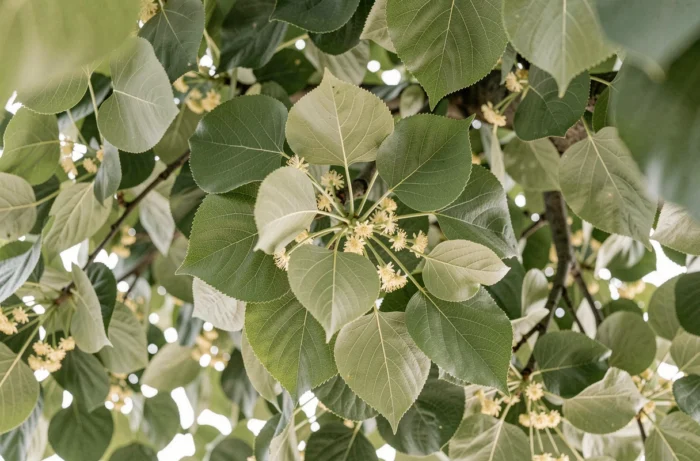
Recent gardening recommendations position bay laurel as a relevant choice for urban spaces. Planted near a sunny facade, it acts as a vegetative barrier against solar radiation, protecting the masonry while withstanding increasingly frequent summer drought episodes.
This robustness makes it a serious candidate for urban greening projects in France, where summers are becoming more intense. Bay laurel can also be grown in containers, allowing it to be placed on a terrace or balcony without the constraints of in-ground planting.
Conservation and future of these species
Several L trees are among the species monitored by conservation programs. The Alpine laburnum (Laburnum alpinum), found in the Alps and the Apennines, is seeing its natural habitat change with warming. The Lagerstroemia loudonii, a tropical tree from Sri Lanka, remains poorly documented outside its native range.
The diversity of trees whose names start with L covers geographical areas ranging from the Mediterranean to New Zealand, with properties ranging from culinary to toxic, and uses oscillating between pure ornamentation and thermal protection of buildings. This variety makes each botanical profile different from the previous one, explaining the lasting interest these species generate among nature enthusiasts as well as landscape professionals.