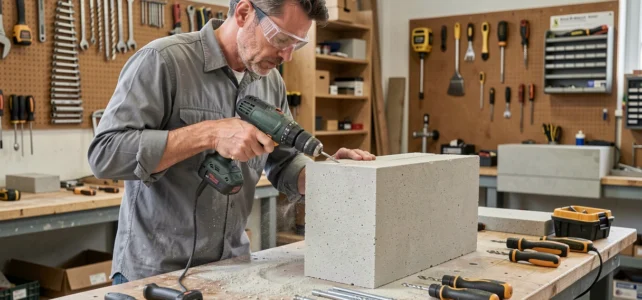
Cellular concrete is appealing due to its lightness and insulating properties, but its cellular structure makes it more fragile than traditional concrete when drilling. A poorly chosen drill bit, excessive pressure, or an unsuitable anchor can easily crack the block or weaken the fastening. Here are seven practical techniques for drilling cellular concrete cleanly and achieving reliable anchors.
1. Disable the hammer function of the drill
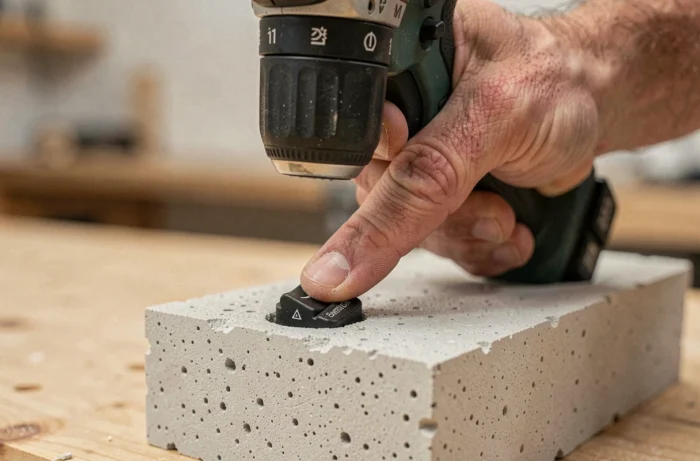
The usual reflex when facing a wall is to engage the hammer mode. On cellular concrete, this action has the opposite effect: the micro-impacts cause the porous material around the hole to burst instead of cutting through cleanly.
Use your drill in simple rotation mode, without hammering. Cellular concrete can be drilled with minimal mechanical effort. A moderate speed and consistent pressure are sufficient to create a clean hole. If your machine does not allow you to disable the hammer function, opt for a standard drill-driver.
Field reports vary on this point when the block contains metal reinforcements. In this specific case, alternate a few seconds of light hammering to break through the reinforcement, then immediately switch back to rotation only.
2. Choose a soft material drill bit rather than a standard concrete bit
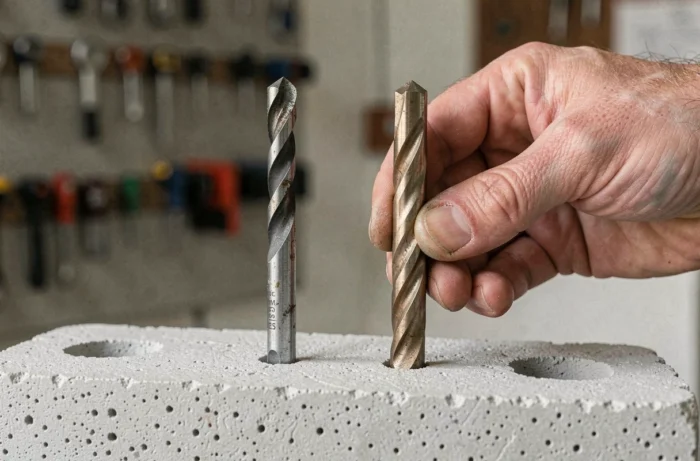
A standard concrete drill bit, designed for hard cement, tends to tear the cellular material and create a flared hole. Prefer a soft material drill bit or a multi-material drill bit with a less aggressive cutting geometry. If you’re looking for more tips for drilling cellular concrete, the choice of drill bit remains the most critical factor.
The diameter of the drill bit must exactly match that of the intended anchor. Drilling wider “to make it easier” reduces the mechanical hold of the fastening in this porous material. It’s better to have a slightly snug hole than one that is too loose.
3. Mark the drilling point with a punch, not a hammer blow
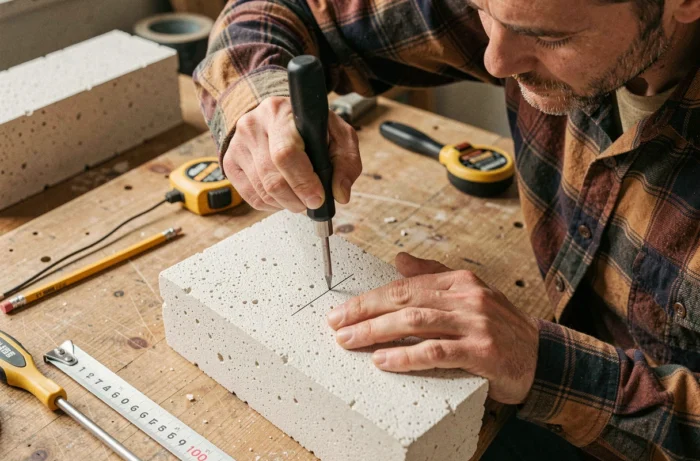
On solid concrete, a light tap with a punch creates a harmless mark. On cellular concrete, a too-dry impact can create a micro-crater that destabilizes the drill bit from the first turns.
Use a spring punch or apply gradual manual pressure. The goal is to achieve a guiding imprint without fracturing the surface. A simple piece of tape stuck in a cross pattern at the target point also prevents the drill bit from slipping at the start.
4. Adjust the drilling depth with a stop or a marker
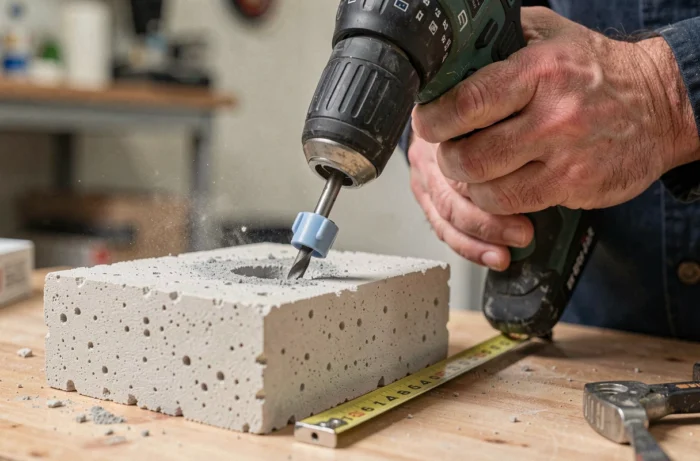
Cellular concrete blocks are rarely more than a few dozen centimeters thick in an interior wall. Drilling too deep means going through the block and breaking through the other side, which compromises insulation and fastening.
Set a depth stop on your drill or wrap a piece of tape around the drill bit at the desired length. The drilling depth should be slightly greater than the length of the anchor, not more. This adjustment also prevents excessive dust accumulation at the bottom of the hole.
5. Vacuum the dust while drilling to preserve the hole
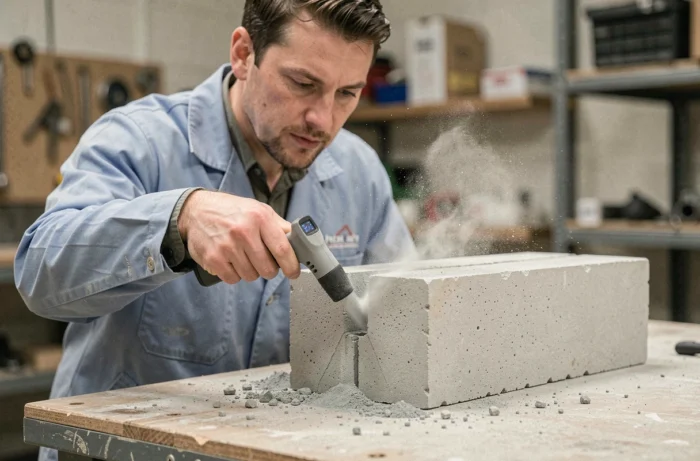
The dust from cellular concrete is fine and abundant. If it remains compacted in the hole, it prevents the anchor from securing properly and reduces the load capacity of the fastening.
- Keep the nozzle of a construction vacuum just below the drilling point during the operation.
- If you don’t have a vacuum, regularly blow into the hole with a bulb or compressed air nozzle, then sweep with a brush.
- Check the cleanliness of the hole by inserting the anchor by hand: it should go in without force but without excessive play.
This often-overlooked step makes the difference between a solid fastening and one that eventually comes loose under load.
6. Use specific anchors for cellular concrete, not universal anchors
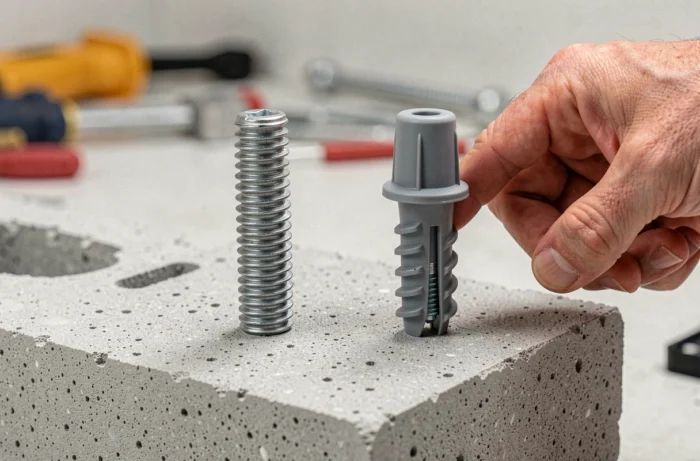
Universal nylon anchors work in solid concrete or brick, but they do not develop enough anchoring surface in a cellular material. Opt for radial expansion anchors designed for cellular concrete, recognizable by their wide wings that expand in the block’s cells.
For heavy concentrated loads (mounting high furniture, ceiling hangers), recent specialized guides increasingly recommend chemical anchors based on resin. Injected into the hole, the resin fills the pores of the cellular concrete and creates a monolithic anchor that is significantly stronger than a standard mechanical anchor.
Reduce the expected load compared to the values indicated for solid concrete. Manufacturers typically provide distinct load capacities based on the substrate: always check the “cellular concrete” line in the technical data sheet.
7. Avoid clustered drilling and damp areas
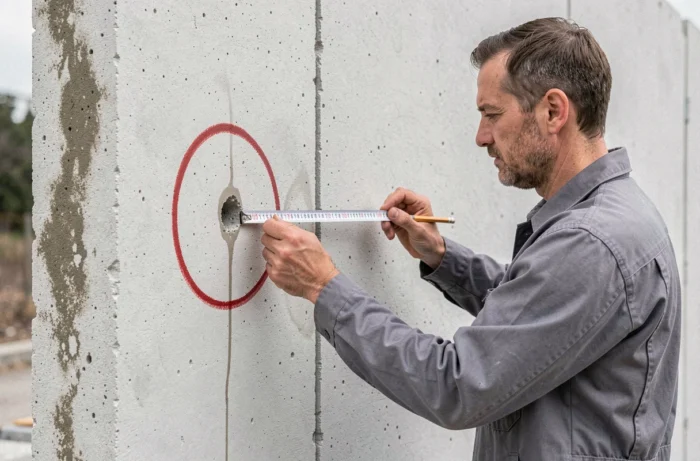
Multiplying holes on a small surface weakens the internal structure of the block. Maintain a spacing of at least several centimeters between two drillings, and stay away from the edges of the block to limit the risk of bursting.
Recent job site feedback indicates that the combination of multiple drillings and prolonged exposure to moisture accelerates cracking in cellular concrete. In a bathroom or poorly ventilated room, water seeps into the micro-cracks created by drilling and gradually degrades the block. Apply a sealant around each fastening in damp areas.
Cellular concrete forgives many things as long as you respect its porous nature. Hammering disabled, suitable drill bit, specific anchor, and cleanliness of the hole: these four parameters determine the entire mechanical hold. The rest is a matter of patience and controlled pressure.