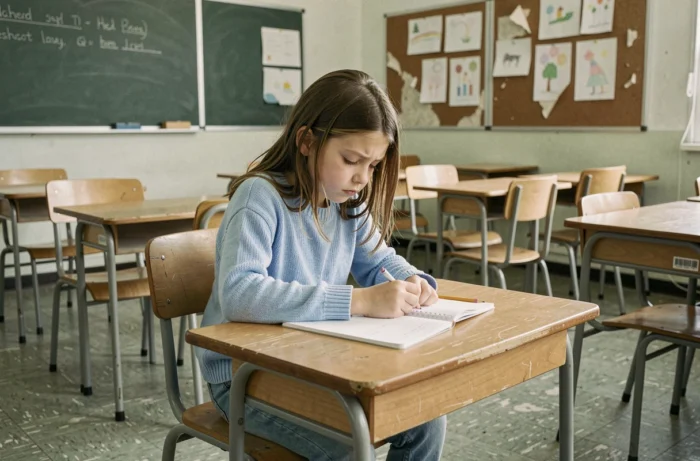
A child who withdraws at lunchtime, another whose school performance declines for no apparent reason, a third who suddenly refuses physical contact. These changes in behavior sometimes go unnoticed or are attributed to tiredness or a growth phase. Recognizing signs of vulnerability in a child means looking beyond this initial interpretation and observing a cluster of converging signals.
Disabilities and communication disorders: when vulnerability remains invisible
Have you ever noticed that a child with a disability rarely expresses distress in the same way as another child? Their dependence on adults and social isolation can increase their exposure to violence while making it harder to recognize.
The most common pitfall is to attribute a change in behavior to the disability itself. An autistic child who displays more repetitive behaviors, a child with an intellectual disability who regresses in their learning: these signs are often interpreted as manifestations of the condition, not as warning signs. As a result, professionals and family members may fail to recognize a situation of abuse for months.
Children with neurodevelopmental disorders or communication difficulties face two risk factors. They may not always be able to verbalize what they are experiencing. And when they do, their words are sometimes considered less reliable. To identify signs of vulnerability in a child, it is therefore important to look beyond words: changes in sleep, food refusal, fearful reactions to a specific person, or new self-harming behavior.
A single sign is never enough to draw a conclusion. It is the convergence of several indicators in a given context that warrants submitting a report of concern.
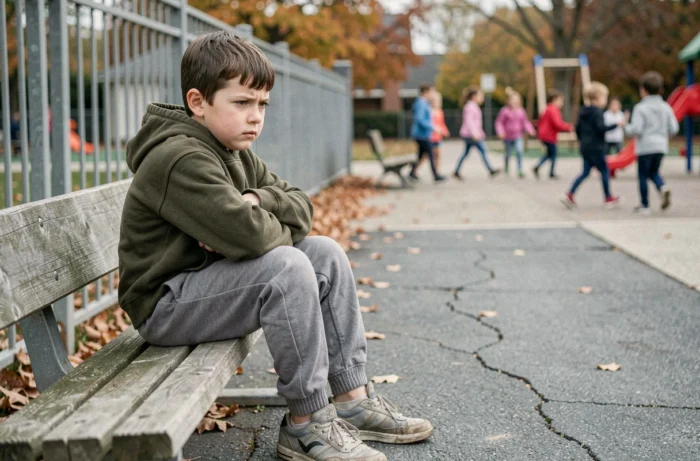
Signs of distress in a child: look for a cluster, not a single symptom
A bruise on an arm is not an indicator of abuse. Nor is a child crying when separated from a parent in the morning. Recognizing a problem requires looking at the whole picture, not focusing on a single incident.
Physical and behavioral signs to consider together
Childcare professionals and attentive parents can look for several categories of signs. None is sufficient on its own, but when they accumulate, the picture changes.
- Physical health: unexplained or recurring marks, persistent sleep problems, repeated physical complaints (stomachaches, headaches) with no identified medical cause
- Social behavior: sudden social withdrawal, unusual aggression, marked fear of a specific adult, sexualized language or gestures that are not age-appropriate
- School: a sudden drop in grades, increasing absenteeism, a new inability to concentrate, persistent defiance toward authority figures
- Emotional well-being: prolonged sadness, disproportionate outbursts of anger, regression (bedwetting, baby talk), expressions of low self-worth
What distinguishes a passing difficulty from a concerning situation is its duration, intensity, and the number of signs present. A child may go through a period of sadness after moving house. When that sadness is accompanied by sleep problems, social withdrawal, and loss of appetite for several weeks, it is worth asking questions.
Concerning situations between children
Recognizing a problem is not only about violence by adults against children. Behavior between minors can also signal a problem. To assess these situations, the relationship context matters: is there a power imbalance, a significant age difference, or repeated behavior? These factors help distinguish a situation that needs further examination from age-appropriate exploration of the body.
Listening to a child without influencing their account
When a child confides in an adult, the adult’s initial response often determines what happens next. Non-leading listening protects the child’s account and preserves the value of their testimony if legal proceedings are initiated later.
In practice, this means asking open-ended questions (“Tell me what happened”) rather than leading ones (“Did your father do that to you?”). Record the child’s exact words. Avoid showing an excessive emotional reaction that might cause them to retract what they said or, conversely, adapt their account to what they think the adult expects to hear.
Avoiding persistent questioning is both an ethical and procedural requirement. Each repeated interview can alter a child’s memory. Professionals trained in listening to children know that one attentive conversation is better than three poorly handled interrogations.
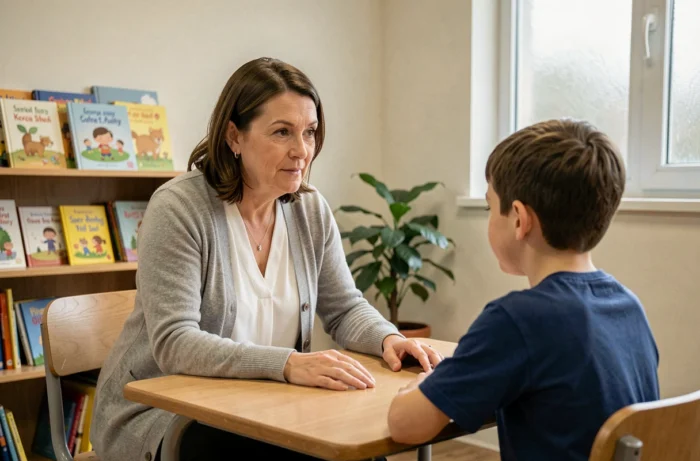
Referrals and reporting: who to contact after identifying warning signs
Recognizing warning signs is not enough. You also need to know where to pass on the information. Whether there is confirmed danger or a concerning situation determines the reporting process.
- In cases of immediate danger or serious incidents, the report should be made directly to the public prosecutor
- For a concerning situation, the information should be sent to the department’s Child Protection Information Collection Unit (CRIP), which assesses the social and family situation
- 119, the national helpline for children in danger, allows anyone, whether a professional or not, to report a situation and receive guidance
Teachers, sports coaches, and neighbors do not need to be certain before passing on information. The law protects people who make reports in good faith. The assessment is then carried out by child protection professionals, not by the person who noticed the signs.
Regarding school bullying, a self-guided training platform for parents, titled “No to Bullying – Tools for Families,” has been available since November 2024. It helps families recognize early warning signs and understand how to respond.
Supporting a child in difficulty starts with accepting that uncertainty is normal and should not prevent you from acting. Sharing a concern is not an accusation; it is a way to protect a child. Every adult who comes into contact with children is responsible for recognizing and reporting concerns. The rest is the responsibility of teams trained to assess the situation and provide support.