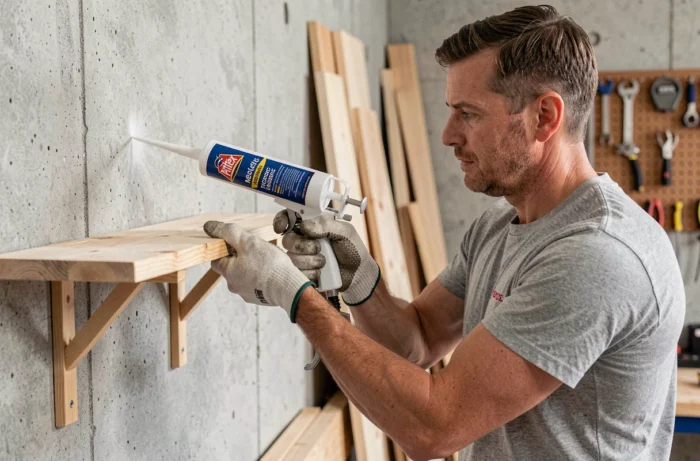
Fixing a PVC baseboard to a plaster wall without drilling, reattaching a door frame to cellular concrete, hanging a heavy mirror in a bathroom: each situation requires a mounting adhesive that delivers on various surfaces. The Pattex Montage Classic adhesive meets these types of challenges with a solvent-free formula designed for interior bonding on most common materials.
Solvent-free adhesive and indoor air quality: a technical criterion
We don’t always think about it when opening a cartridge, but the composition of a mounting adhesive has a direct impact on the air we breathe during and after the job. Since 2024, European regulatory pressure on volatile organic compound (VOC) emissions in construction products has significantly increased. Emission class standards (A+, A, etc.) are now a selection criterion for project owners, including on private residential sites.
The Pattex Montage Classic is formulated with water, solvent-free and low VOC emissions. In practice, this means it can be used in a closed room (bedroom, office, kitchen) without prolonged forced ventilation. For a tradesperson working in an occupied environment, this is a concrete advantage: no lingering odor, no ventilation delay imposed on the client before re-entering the room.
This point distinguishes water-based adhesives from neoprene adhesives or solvent-based formulas, which remain effective but generate significant emissions for several hours.
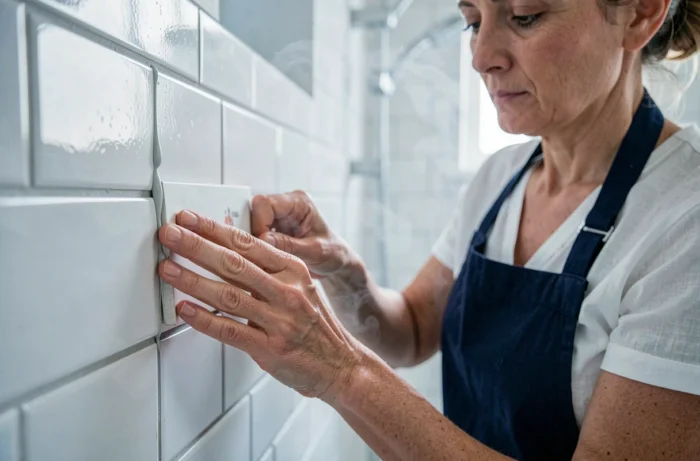
Compatible materials and bonding strength of Pattex Montage
In practice, a mounting adhesive is rarely used on just one type of substrate. A single job may involve solid wood, painted metal, expanded PVC, plaster, or concrete. This is where Pattex Montage Classic adhesive becomes valuable: it adheres to most of these substrates without requiring a primer.
The bonding works through wet adhesion. The adhesive is applied in beads or blobs on one of the surfaces, the element is pressed into place, and the initial bond occurs while the water in the formula evaporates or migrates into the substrate. The final strength is very high on porous substrates such as wood, plaster, or raw concrete. On non-porous substrates (smooth metal, glass, certain hard plastics), results vary depending on the surface condition and preparation.
One important point to remember: this adhesive dries clear. For visible fixings (white moldings, light baseboards), the adhesive joint does not create an unsightly mark if a slight excess overflows.
Surfaces where the adhesive performs best
- Solid wood, particleboard, MDF, and wood composites: structural bonding suitable for furniture assembly or batten installation
- Plaster, concrete, brick: good penetration into the substrate’s porosity, quick setting, and lasting hold
- Laminate and decorative panels: sufficient adhesion for light to moderately heavy elements fixed indoors
- Rigid PVC and extruded polystyrene: compatible without chemical attack on the substrate, unlike solvent-based adhesives that can dissolve certain plastics
Field application: preparation and installation technique
The preparation of the substrate directly affects the bonding strength. Clean the surface (no dust, no grease), and ensure it is dry. On a painted wall in good condition, light sanding with fine grit improves mechanical grip. On new concrete or fresh plaster, wait until the substrate is perfectly dry.
Applying the adhesive in parallel beads spaced a few centimeters apart yields better results than a uniform spread. The beads allow air to circulate between the contact points during setting, which speeds up drying. For heavy items (shelves, massive frames), thick blobs are preferred at the four corners and in the center.
Pressing and drying time
After placement, pressure must be maintained on the bonded element. In practice, solid masking tape, clamps, or simply a temporary brace can be used depending on the configuration. Pressing during the first few minutes ensures intimate contact between the surfaces.
Complete drying depends on the porosity of the substrate and ambient ventilation. On raw wood in a well-ventilated room, final strength is achieved in a few hours. On a less porous substrate or in a humid environment, it takes longer. It’s best not to mechanically stress the bond before complete drying.
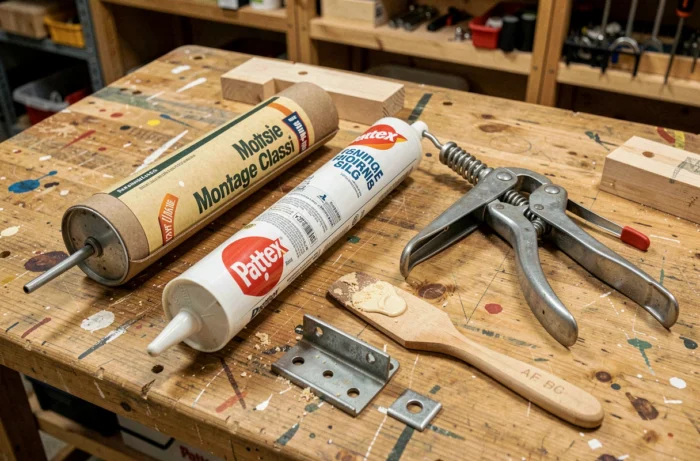
Mounting adhesive or mechanical fixing: when adhesive replaces the drill
We are often asked if mounting adhesive can really replace screws and plugs. The answer depends on the load and the substrate.
To fix baseboards, corner strips, decorative rosettes, light cornices, or cladding panels, mounting adhesive is sufficient and avoids drilling fragile substrates such as plaster, tiles, or cellular concrete. No risk of cracking, no dust, no noise: this is a real advantage in occupied apartment renovations.
For heavy loads subjected to pull-out forces (fixing tall furniture, TV mounts), mechanical fixing remains the normative reference. The adhesive can then serve as a supplement to distribute forces and stiffen the assembly, but it does not replace anchoring in masonry.
Quick selection criteria
- Decorative or light elements indoors: mounting adhesive only, direct application
- Moderately heavy elements on porous substrates: mounting adhesive with reinforced pressing and drying time respected
- Heavy loads or stressed substrates: mechanical fixing prioritized, adhesive as a supplement for rigidity
The Pattex Montage Classic is positioned for the first two use cases. Its solvent-free formula, multi-material compatibility, and transparency upon drying make it a versatile product for common indoor fixing tasks. The only point of caution remains the preparation of the substrate: a clean and dry surface makes all the difference between a bond that lasts for years and an element that comes loose at the first summer heat.