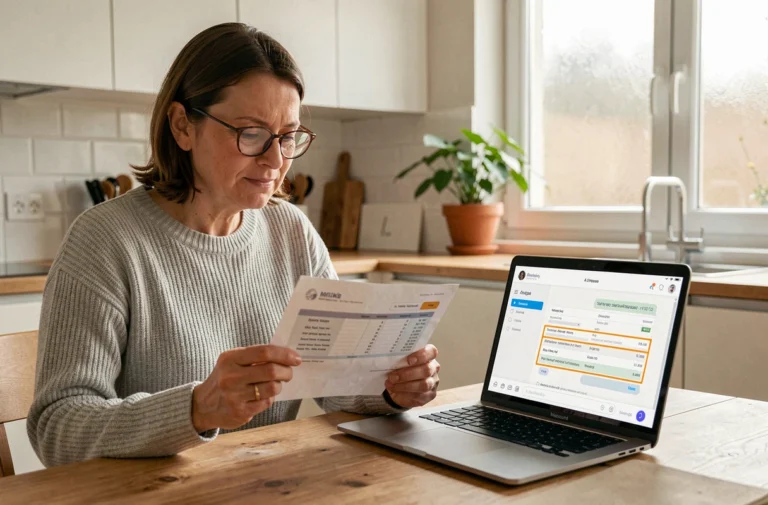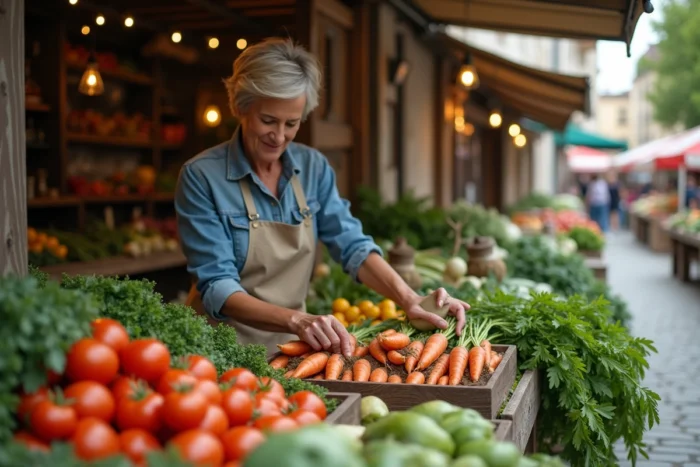
Consuming local and organic is not just about choosing the closest stand at a Sunday market. The challenge lies in verifying the true origin of products, understanding labels, and establishing a regular supply that lasts over time.
Traceability of local organic products: reading beyond the AB label
The AB label guarantees compliance with the European specifications for organic farming. It says nothing about the distance traveled by the product or the specific agronomic practices of the producer.
We are seeing a growing demand from consumers for clear information on cultivation methods, plot origin, and transport conditions. The label alone is no longer sufficient: traceability replaces the food mile as a trust criterion.
To verify the reliability of a local organic producer, we recommend cross-referencing three elements: the organic certification number (available in the Agency Bio directory), the mention of the production location on the label, and the frequency of batch renewals. A farmer who displays their plots and crop rotations offers a higher level of transparency than one who simply relies on the green sticker.
Specialized platforms like Le Bio du Coin facilitate direct connections with producers whose practices are documented, simplifying the verification process for buyers.
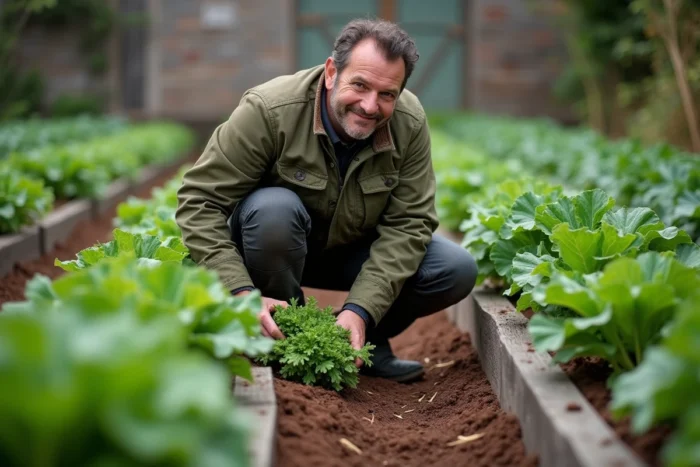
AMAP, buying groups, and farm baskets: choosing the right short circuit
Not all short circuits operate in the same way. The choice of supply channel determines the regularity, price, and diversity of fresh products available near you.
AMAP: long-term commitment
The AMAP is based on a contract between a group of consumers and one or more producers. Members pay in advance, often quarterly or biannually, and receive a weekly basket whose contents vary according to the season. The advance financial commitment secures the producer’s income and guarantees vegetables and fruits harvested in the days preceding distribution.
The trade-off is the lack of choice regarding the basket’s composition. If your household consumes few root vegetables in winter, part of the basket may go unused.
Buying groups: flexibility and volume
A collective buying group allows orders to be placed with several local producers by pooling delivery costs. The operation often relies on a volunteer coordinator who centralizes orders and organizes a pick-up point.
The main advantage is flexibility: you order what you need, at a frequency that suits you. The downside is the logistical burden resting on a few individuals.
Online farm baskets and local drives
Digital platforms connecting consumers with local producers have multiplied. They allow you to create a personalized basket of fruits, vegetables, dairy products, or meat, with pick-up at a relay point or home delivery.
- Check that the platform displays the name and location of each producer, not just the mention “local”
- Compare service fees: some drives charge a commission that affects the final price
- Prefer platforms that indicate the harvest or slaughter date, a guarantee of real freshness
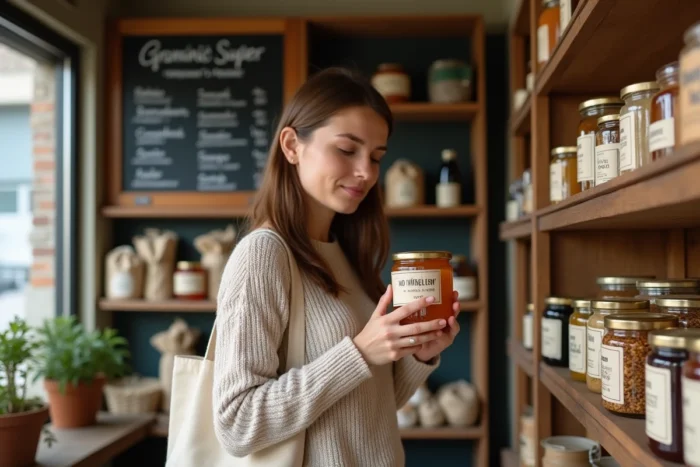
Seasonality and preservation: two underutilized levers
Eating organic and local year-round requires mastering the harvest calendar. Outside the May-October period, the diversity of locally available fruits and vegetables drops in most French regions. The temptation is then to revert to imported organic products, which negates the benefits of the short circuit.
The solution lies in domestic preservation. Lactofermentation, canning, drying, freezing: these techniques allow for extending the availability of seasonal products for several months.
- Root vegetables (carrots, beets, turnips) can be stored in a cellar or sand silo for several weeks without significant nutritional loss
- Lactofermentation transforms cabbage, green beans, and cucumbers into living preserves, rich in probiotics, without sterilization
- Freezing red fruits and beans, done on the same day as harvest, preserves most vitamins
We recommend planning your local organic purchases according to your region’s production calendar. A chart displayed in the kitchen with available vegetables and fruits month by month helps avoid impulse purchases out of season.
Anti-waste and local consumption: a logical convergence
Unsold products from local producers represent a source of fresh products at reduced prices, often overlooked. Services like Too Good To Go connect merchants and consumers to recover surprise baskets made up of unsold items from the day.
Buying surplus from an organic farmer supports their operation while reducing waste. This approach works particularly well in urban areas, where the density of partner businesses is sufficient to offer varied baskets.
Beyond applications, some farms practice organized gleaning: after mechanized harvesting, individuals are invited to collect remaining fruits and vegetables. This system exists in several regions for apples, potatoes, and squash.
Local organic budget: balancing expenditure items
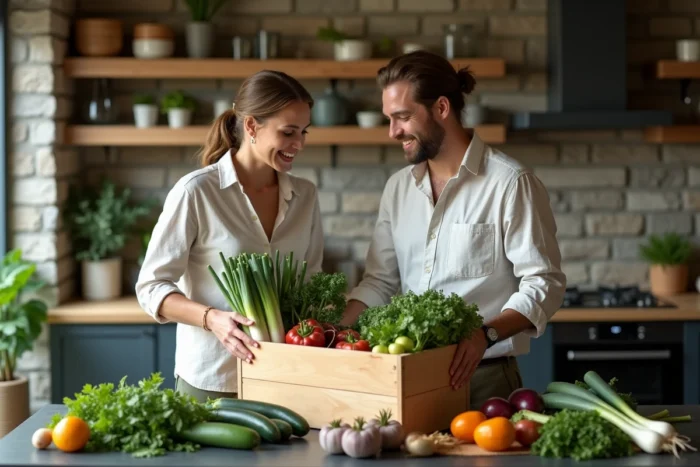
The additional cost of local organic compared to conventional supermarket products varies by sector. Seasonal vegetables purchased through short circuits are often close to supermarket prices, or even cheaper, because the intermediary’s margin disappears. The real additional cost is concentrated on animal products (meat, eggs, cheese), where organic farming conditions significantly increase production costs.
The most effective balancing act is to shift all your fruit and vegetable purchases to the organic short circuit, and to reduce the volume of animal products rather than seeking low-cost organic in large retail. This rebalancing allows for maintaining a stable food budget while increasing the share of local and organic products in the diet.
The regularity of supply remains the determining factor. An AMAP subscription or a structured buying group costs less annually than occasional purchases at markets, where the lack of planning leads to impulsive spending.